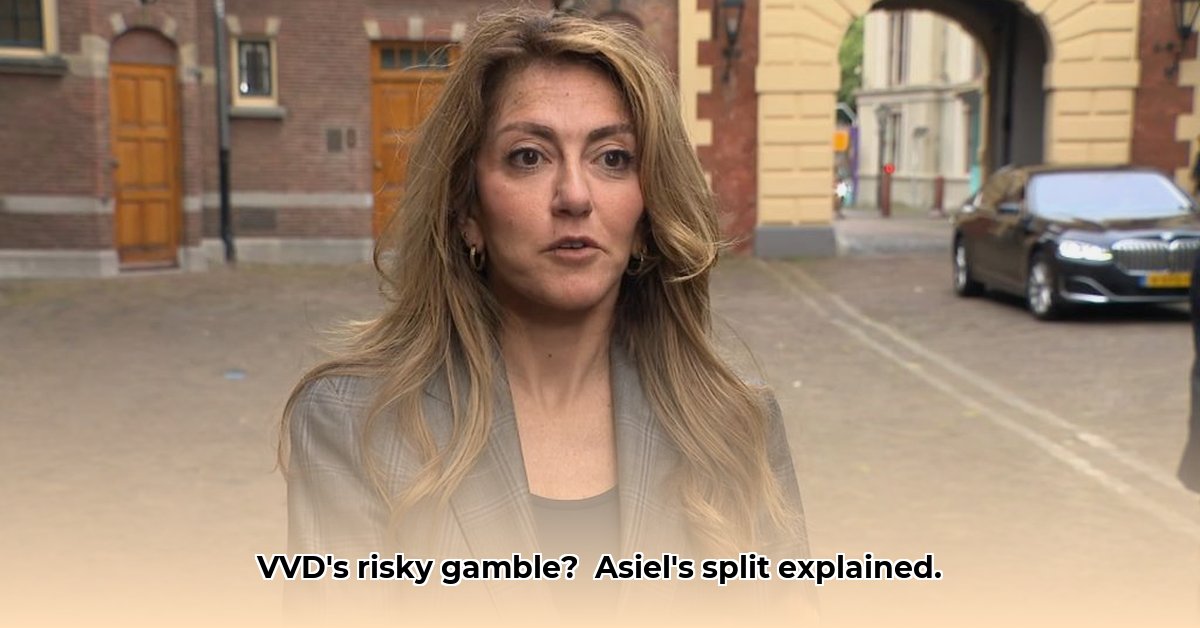
VVD Minister Asiel: A Three-Way Split – Clever Politics or Policy Chaos?
The Dutch asylum system is currently overseen by three ministers from different parties – a VVD Minister for Asylum, alongside colleagues from the NSC and BBB. This unprecedented arrangement, closely preceding the general election, has sparked considerable debate. Is this a strategic political manoeuvre or a recipe for administrative chaos? This analysis delves into the intricacies of this complex situation.
The Political Backdrop
The current climate surrounding asylum in the Netherlands is fraught with tension. Public opinion is deeply divided, with political parties holding vastly different views on asylum seeker influx management. The VVD, generally considered centre-right, typically prioritizes robust border control and streamlined processing. The NSC, often positioned on the left, emphasizes the integration of asylum seekers. The BBB, representing rural interests, focuses on the practical impacts on local communities. This ideological clash sets the stage for the current political drama.
A Divided Portfolio: Political Strategy or a Recipe for Disaster?
The decision to fragment the asylum portfolio appears to be a calculated political move, prioritizing electoral advantage over optimal governance. Each party receives a specific area of responsibility: the VVD Minister for Asylum might handle border security and initial application processing, showcasing strong leadership on a key voter concern. The BBB, aiming to attract voters worried about local impacts, might manage local integration programs and housing. The NSC's role might center around supporting asylum seekers once they are within the country. This isn’t simply task division; it’s about strategic image crafting targeted at specific voter demographics in the run-up to the elections. Is this shrewd politics, or a risky gamble?
Potential Pitfalls: Risks and Challenges
While this strategy might yield short-term political gains, significant drawbacks loom. The prospect of three ministers, each with distinct political priorities, managing a highly interconnected system raises concerns – will cooperation prevail? What are the potential consequences?
- Policy Inconsistencies: Conflicting approaches from different parties can create a confusing and contradictory policy landscape.
- Inter-ministerial Disputes: Disagreements and jurisdictional battles could lead to processing delays and inefficiencies.
- Inefficient Resource Allocation: Unequal distribution of resources (funding, personnel) might create bottlenecks and hamper overall effectiveness. Could this cost-saving strategy actually prove more expensive in the long run?
- Negative Public Perception: Any inefficiencies or conflicts could damage public trust in government.
- EU Compliance Challenges: Failing to meet EU asylum regulations could have serious international consequences. What steps will be taken to ensure compliance?
Election Year Tactics or Long-Term Vision?
The timing of this portfolio division is undeniably significant, strongly suggesting a pre-election manoeuvre to influence public perception. Each party hopes to demonstrate competence in their assigned area to attract votes. It's a political gamble, and the ultimate outcome remains uncertain. Will it ultimately benefit voters?
The Future of Dutch Asylum Policy: Uncertainty and Open Questions
The long-term consequences of the portfolio split are unclear. While offering short-term electoral advantages, considerable risks exist. Will this experiment in divided governance prove successful or fail? Only time will tell. The performance of the Ministers will be under close scrutiny, directly affecting public trust and election results. The success or failure of this approach will likely shape Dutch asylum policies for years to come.
How to Navigate the Fragmented Dutch Asylum Policy
Key Takeaways:
- The collapse of the Dutch government underscores the critical role of immigration in the upcoming election.
- A tripartite split of the asylum portfolio creates uncertainty and potential inefficiencies.
- The contrasting approaches of the VVD, BBB, and NSC towards asylum could lead to policy clashes.
- Two vital asylum bills are currently stalled, impacting public perception and electoral strategies.
- Navigating this fragmented policy requires a thorough understanding of each party's position and potential compromises.
The Political Earthquake: A Divided Portfolio
The Dutch political scene is currently volatile. The government's collapse, stemming from asylum policy disagreements, has left the portfolio split among the VVD, BBB, and NSC. This pre-election power struggle presents a significant challenge: how to navigate the fragmented Dutch asylum policy? This question is paramount for voters.
The situation is complex. Can effective policy emerge from such a divided approach? Or is stalemate inevitable?
Understanding the Players and Their Stances
The VVD, a major player in immigration policy, is maneuvering for influence. The BBB, enjoying considerable public support, is actively promoting its agenda. The NSC, a key political player, is aiming to guide policy toward its vision. Each party's stance on asylum isn't mere rhetoric; it's a strategic move in the pre-election battle. Their differing views create an obstacle for anyone attempting to understand, much less navigate, the new reality.
The Risks of Fragmentation
The current situation poses significant risks. Policy inconsistencies are highly likely. Inter-ministerial conflicts are inevitable. Resource allocation will likely be erratic. What does this mean for the public? Confusion, frustration, and uncertainty. Internationally, the Netherlands' reputation will also be impacted. A coherent, effective plan is crucial.
A Path Forward: Potential Solutions
This transcends political gamesmanship; real lives are affected by delays and inconsistencies. How can progress be made? While simple solutions are lacking, several avenues warrant exploration:
- Strengthened inter-ministerial cooperation: Regular meetings, shared goals, and transparent communication are essential.
- Streamlined decision-making: Clear responsibilities and authority must be established.
- Public engagement: Open communication with the public will help maintain trust and manage expectations.
- EU compliance: The Netherlands must ensure its policies conform to EU frameworks.
This requires not only political will but also competent leadership and a spirit of collaboration.
Looking Ahead: Uncertainty and Opportunity
The political environment is dynamic. The near future will be shaped by election results and coalition negotiations. However, the current situation presents an opportunity to rethink and possibly improve Dutch asylum policy. Will this chance be seized or missed? The coming months will be crucial in determining the path forward. This extends beyond a political crisis; it's a defining moment for the Netherlands' approach to humanitarian obligations and immigration management.